Preventive pest management is exactly what it sounds like — ongoing inspection, monitoring and treatment designed to stop pest problems before they start, regardless of whether any pest activity is currently visible. Rather than waiting for a sighting, a complaint, or a failed inspection to trigger action, preventive management works on a scheduled basis, catching early signs of activity and addressing the conditions that could lead to an infestation — often long before it would otherwise be noticed.
This approach is widely referred to in the industry as Integrated Pest Management (IPM): a structured, ongoing program combining regular inspection, monitoring, exclusion (sealing entry points) and targeted treatment, applied as a standing part of property maintenance — not just as a one-time response to a problem.
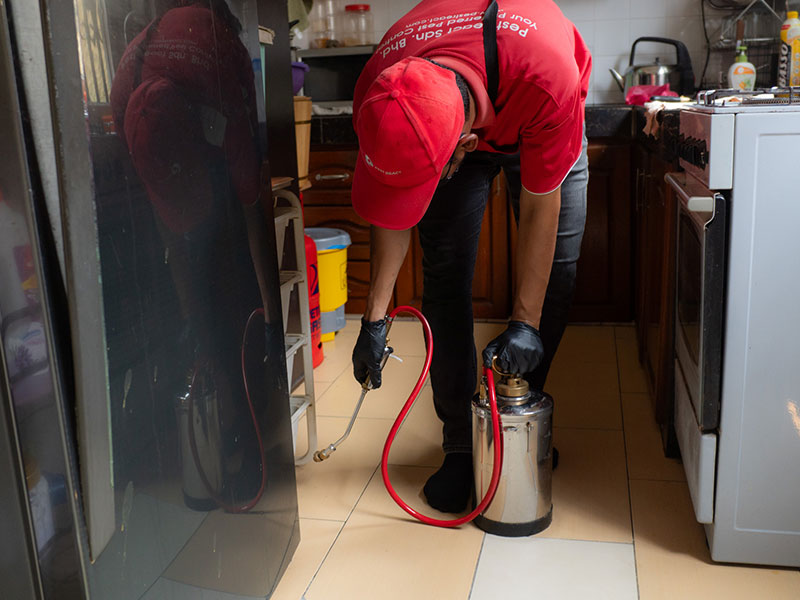
For F&B outlets, food manufacturing facilities, hospitality businesses and other commercial premises, pest control is increasingly tied to compliance, certification and reputation — not just comfort. Health inspections, HACCP audits, and export or certification requirements often expect documented, ongoing pest management, not a one-off treatment after a problem is found. A consistent preventive program provides that documentation while reducing the risk of an incident occurring in the first place — including the reputational damage a single visible pest sighting can cause, regardless of how isolated it was.
Most infestations follow a similar progression:
Reactive pest control typically only engages at stage 3 or 4 — by which point treatment is more extensive, more disruptive, and more expensive than it needed to be. Preventive pest management is designed to intervene at stage 1 or 2, through regular inspection and monitoring, before a small presence has the chance to become an established problem.
A preventive program typically combines several approaches, rather than relying on a single method:
Without a scheduled program, pest risk factors tend to accumulate quietly: a small gap goes unsealed, a minor leak creates persistent moisture, stored items go unchecked for months. None of these alone may seem urgent — but combined, and left unaddressed, they create exactly the conditions pests need to establish. By the time activity becomes visible, multiple contributing factors are often already in place, which is part of why reactive-only treatment sometimes needs to be repeated — the treatment addresses the pests present, but not necessarily the underlying conditions that allowed them to establish in the first place.
| Reactive Pest Control | Preventive Pest Management | |
|---|---|---|
| When action is taken | After pests are already visible or reported | On a regular schedule, regardless of visible activity |
| Scope of treatment | Often broader, as the problem has had time to spread | Targeted, based on monitoring data |
| Cost over time | Can involve repeated, larger treatments | Generally more predictable and cost-efficient long-term |
| Business impact | Risk of disruption, complaints, failed audits during an active infestation | Lower risk of disruption, supports ongoing compliance |
| Documentation | Often limited to the incident itself | Ongoing service history, useful for audits and certifications |
Neither approach eliminates all risk — but preventive management significantly reduces the likelihood of a problem reaching the point where it affects operations, reputation, or compliance.
01
Seal gaps in roof eaves, soffits, wall cavities and signage that could serve as nesting cavities
02
Trim vegetation and hedges regularly, particularly close to entrances and walkways
03
Inspect elevated and sheltered areas of the property periodically, especially approaching warmer, drier periods when nest-building activity tends to increase
04
If you spot a small, newly-forming nest, avoid disturbing it and contact a professional early — before the colony grows

You don’t need to see a pest to benefit from preventive pest management — in fact, that’s the whole point. Our team can assess your property and set up a scheduled program suited to your premises, before activity has the chance to establish. Contact us to get started.
Learn how preventive pest management works, who needs it, and how regular inspections and targeted treatments help prevent infestations before they start.
It’s an ongoing program of scheduled inspection, monitoring and targeted treatment designed to prevent pest problems before they develop — applied regardless of whether pest activity is currently visible.
Any property owner or business wanting to avoid the disruption, cost and reputational risk of a reactive infestation — particularly F&B outlets, food manufacturing facilities, warehouses, hospitality businesses and other premises where pest activity carries compliance or audit implications.
At any time — it doesn’t require an existing pest problem to begin. In fact, starting before any activity is present is the point: catching conditions and early signs before they develop into a full infestation.
On the conditions and entry points that allow pests to establish — moisture, food sources, structural gaps and storage practices — in addition to monitoring for any early signs of activity across a property.
Through scheduled visits combining inspection, monitoring station checks, risk factor review and targeted treatment where needed, with a service report provided after each visit to build an ongoing record of the property’s pest risk status.
Concerned about termite activity? Contact Pest React for a professional inspection.